Meet the partners
Vizor was founded by Farhan Rizvi and Kristina Rockwell after careers spent inside complex organizations, helping people navigate consequential decisions, organizational change, and moments when the old playbook stopped working.
We see different parts of the problem first. Farhan is drawn to the human system: your history, relationships, values, and the particulars a structural view can miss. Kristina sees the structural pattern: the assumptions, mechanics, and competing forces quietly driving the stuckness.
You get both perspectives in service of one thing: helping you see more clearly and move in a direction that is genuinely yours.
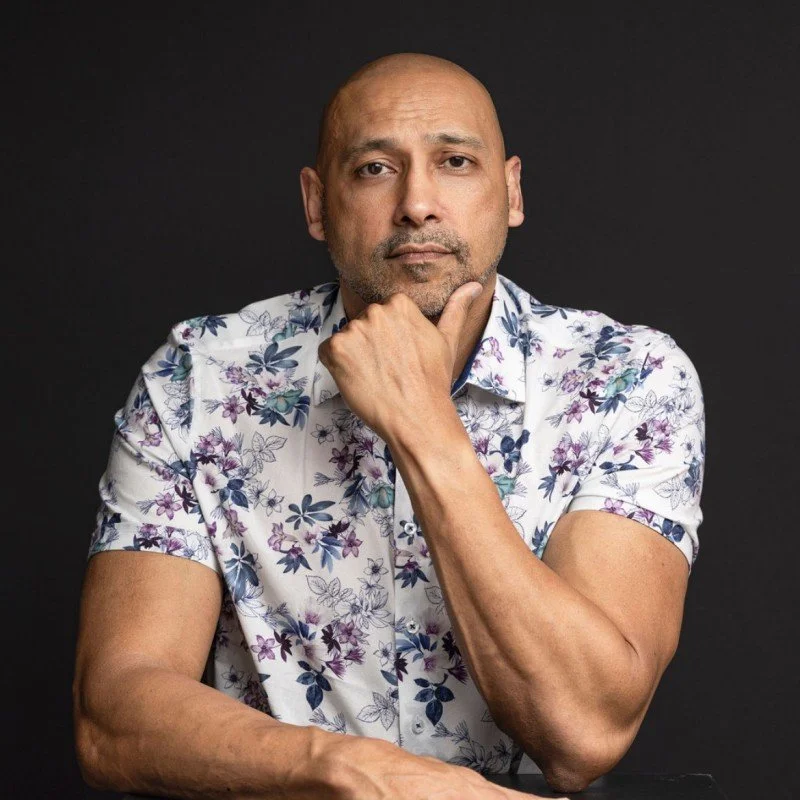
Farhan Rizvi
Founder
Based in Seattle
Farhan didn't start at the top. He started in a call center.
Before the executive titles, before the Fortune 50 programs generating billions in savings, before the MSOD from Pepperdine — there was a kid who lost his mother at 13, raised his younger brother, moved out on his own at 16, and figured out how to build something from almost nothing.
That foundation never left him. It's why he understands what it actually takes to navigate uncertainty — not as a concept, but as something he has lived.
Over a career spanning more than 35 years, Farhan has led and developed people across industries most executives have only seen from the outside: wholesale, medical, retail, restaurant, sales, technology, and telecommunications. He has managed performance at every level of an organization — from frontline teams to executive leadership — and the through-line across all of it has been the same question: what does it actually take for people to do their best work, and what gets in the way?
That question eventually took him back to school. Mid-career, he pursued an MSOD from Pepperdine — not for the credential, but to study the human systems underneath the org chart. His thesis was on performance management. His fieldwork took him to Procter & Gamble in Costa Rica, the French Regional Government in Lyon, and a construction firm outside Beijing. Three different countries, three completely different organizations, one consistent pattern: the technical problem is rarely the real problem. The human one usually is.
He's been married for 34 years and raised three kids. He knows what it means to carry responsibility for other people over a long horizon — not as a leadership framework, but as a daily practice.
When Farhan works with you, you're not getting someone who studied transitions from the outside. You're getting someone who has navigated them — personally, professionally, and organizationally — and built something worth pointing to on the other side of each one.
He gets specific to you: your history, your people, your particular version of the problem. That's not a methodology. It's just how he's always worked.
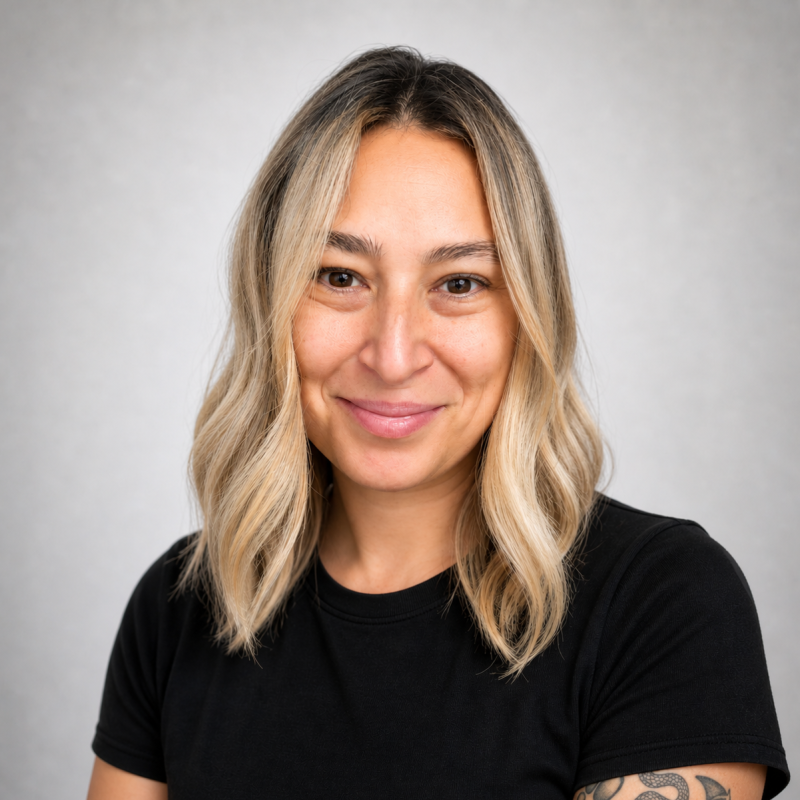
Kristina Rockwell
Founder
Based in San Diego
Kristina learned early in her career that there can be a long distance between a decision that makes sense in a conference room and the experience of the person living with it.
She started on the sales floor, where she learned to pay attention to people — what they say they need, what they actually need, and what gets missed when the people closest to a problem aren't part of the conversation.
Over the years, Kristina has worked across retail, wholesale, technology, sales, strategy, and operations. She has advised businesses, led complex transformations, and worked alongside executives navigating decisions where the stakes were high, and the answer wasn’t obvious.
Much of her career has been spent in the spaces between things: between strategy and execution, what a leader intends and what people experience, and the problem everyone is talking about and the one that actually needs to be solved.
During the Sprint and T-Mobile merger, Kristina helped lead strategy and execution, contributing to approximately $43 billion in present value realized for shareholders. But what stayed with her most wasn't the number. It was watching thousands of people navigate uncertainty at the same time — building something new while letting go of something familiar, making decisions without perfect information, and figuring out where they belonged in what came next.
Kristina became increasingly interested in that part of the work.
Her background in politics taught her to look at systems, incentives, power, and the forces shaping how people behave. Her career reinforced something she came to believe deeply: the question someone brings you is not always the question they actually need to answer. Sometimes you have to get underneath it.
Today, that is at the center of how Kristina works with people.
Working with Kristina means having someone in your corner who listens closely, asks the questions others may not, tells you what she sees, and helps you make sense of the whole picture without trying to decide for you.
She also understands that work is only one part of that picture. As a mother who has shared nearly two decades of life with her partner, Kristina knows that decisions about work, ambition, money, family, time, and identity rarely exist separately from one another. A decision can make perfect sense on paper and still not make sense for you.
That is the work Kristina is drawn to: helping people understand what is really going on, what matters now, and what they want to make possible from here.
Here's who we are — so you can decide if we're the right people for you.
This work is personal. Not just for you, but for us too. We built this because we genuinely care about the people we work with — not as clients, but as people navigating something real. That's not a positioning statement. It's the reason we do this at all.
We're also building this inside a full life — not instead of one. That means we show up fully when we're with you, and we protect the time and space that makes that possible. We're not going to be the advisors pinging you at midnight to prove we're invested. What we will do is be present, honest, and completely focused when we are. If you're looking for someone available around the clock, we're probably not the right fit — and we'd rather tell you that now than disappoint you later.
We say no more than most people expect. Not out of arrogance, but because we take seriously what it actually means to help someone. We work with a small number of people at a time, by design, because this kind of work doesn't scale without losing the thing that makes it work. We'd rather be genuinely excellent for a few people than adequate for many.
We also don't bring a playbook and run it on everyone. Two people can walk in with what looks like the same problem and need two completely different things underneath. So we start from scratch every time — with your history, your situation, your particular version of the question you're trying to answer. It takes longer that way. It also actually works.
When we do say yes, we're already thinking about the day you don't need us anymore. That's not false modesty — it's the whole point. We're not here to create a dependency. We're here to help you get somewhere you couldn't get to alone, and then watch you go. We measure success by the clarity and capability you leave with, not by how long the engagement runs.
None of this works without trust, and trust requires honesty — including the kind that's uncomfortable. We will tell you things you might not want to hear. We'll challenge the story you've been telling yourself if it's keeping you stuck. That's not the overhead on top of the relationship. That is the relationship.
We want to love the work. Capability gets us in the room, but it's genuine care that actually makes a difference. We won't take an engagement we're not excited about — not because we're precious about it, but because you deserve someone who's fully in. Sometimes that means telling you we're not the right fit and pointing you toward someone who is. The answer has never changed based on what was on the table.
We'd rather mean our yes than default to it. If any of this resonates, we'd love to talk.